
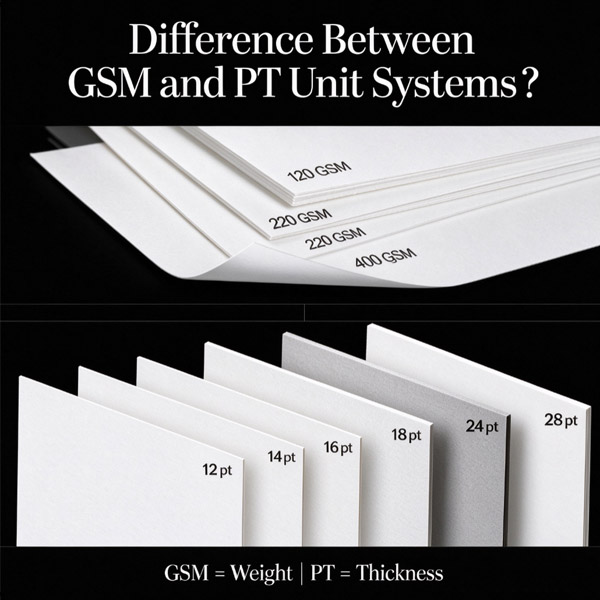
GSM and PT are two common units used to measure paper substrates for printing materials. Many buyers wonder what these measurement systems are and how to apply them when selecting packaging and printing stocks. It is critical to understand the differences between PT and GSM units before ordering custom packaging. This guide covers everything you need to know about Grams per Square Meter and the Point system. Keep reading to learn more.
Why Do Paper Measurement Units Matter?
Packaging has become essential across nearly every industry. Brands invest in high-quality packaging to elevate their brand reputation. Product packaging can either raise or reduce perceived product value.
Brands run multiple quality assurance tests to verify packaging performance. Poorly made packaging can damage your brand image and devalue your products, so flawless packaging construction is vital. Material selection is the foundation of great packaging. Popular stock choices include kraft, cardboard, paperboard and corrugated board.
Material quality is determined by strength, weight and fiber structure. The key question is: how do you measure paper thickness and weight? GSM and PT measurement systems give you the answer. These units help you select the correct paper weight and thickness. Generally, higher GSM and PT values mean stronger packaging.
GSM vs PT Unit System
GSM stands for Grams per Square Meter, while PT refers to the Point system. Both units evaluate paper thickness for packaging and printing applications and help determine paper mass and density for cardboard, paperboard and other paper stocks. Besides box thickness, paper weight also plays a major role, often measured in reams and bundles.
Let’s break down each measurement system separately.
Grams Per Square Meter (GSM)
Grams per Square Meter (GSM) is a metric paper measurement, unlike the imperial-based Point system. When examining packaging materials, note that paper thickness does not always equal durability. Some thin papers still have high tear resistance and can withstand external damage. As a general rule, higher GSM corresponds to heavier paper stock.
PT (Point System)
Like GSM, the PT Point system measures paper thickness using a caliper or micrometer. One point equals 0.001 inches. For example, 10 pt stock measures 0.01 inches thick.
Many printers and suppliers rely on the Point system to reference board thickness for production and shipping planning. PT values also help select suitable printing machinery for your paper stock. Just like GSM, paper thickness increases as the PT number rises.
Overview of Common GSM and PT Paper Weights & Applications
| GSM Range | PT Range | Common Uses |
|---|---|---|
| 35–55 | 3–6 | Newspaper: thin, lightweight fragile stock |
| 90–100 | 7 | Standard office printer paper |
| 120–140 | 8 | Posters, bulletins and flyers |
| 210–300 | 9–12 | Magazine covers |
| 350–600 | 14–20 | Packaging boxes, invitations, business cards, flyers |
Converting GSM And PT Units
PT and GSM both describe paper specifications, but they measure different properties. GSM measures paper weight, while PT measures physical thickness. A conversion chart can help you compare these two values.
Are GSM And PT the Only Factors for Selecting Packaging Paper?
When picking packaging materials, GSM and PT are not your sole decision criteria. They only measure paper thickness and density. Many additional factors help you choose the ideal paper stock for your packaging project.
To Summarize
Your choice of measurement unit depends on your paper packaging type. The whole printing and packaging workflow relies on paper thickness specifications. Analyzing paper thickness, weight, GSM and PT can feel complicated, but you do not need to handle it alone.
You can contact the team at A BOX STORE. We understand the complexities of custom packaging. Our packaging specialists help you pick the most suitable materials. If you have questions or ideas for your packaging project, our team can bring your creative concepts to life. Get in touch today to make confident packaging decisions.